
"Barahona coffee"
600 article(s) found

Santo Domingo coffee varieties with rich taste, taste, boutique coffee beans
Dominican coffee is grown in upland and lowlands and tastes slightly different. Highland plants are sour, but rich in taste; lowland plants are less sour and smoother in taste. In recent years, specialty coffee has become popular. Some Dominican estates produce high-quality coffee beans with rich aroma and rich taste, with a moderately bright acidity. They have been compared with the more famous Puerto Rico beans or teeth.

Smooth and smooth Dominican Coffee Manor flavor and taste characteristics of Dominican coffee
Carefully selected in this way, the high-quality Dominican coffee exudes a faint aroma and gives people a faint fruity aroma with a lingering finish and a smooth and smooth finish. Dominica coffee beans (Caribbean) Dominica coffee is grown in highlands and lowlands, and its taste is slightly different. The upland is sour, but the taste is rich; the lowland is less sour.

A brief introduction to the description of the flavor, taste and aroma characteristics of bright and sour Dominican coffee beans
The temperate climate in Dominica is conducive to coffee cultivation, and the best places to grow coffee are the Barahona region in the southwest and the Cibao Valley north of Santiago, Dominica's second largest city. The northern region, represented by Hibao, and the southern region, including Okayabani Santo Domingo, produce good coffee. Among them, Santo

A brief introduction to the origin, development, history and culture of Dominica boutique coffee beans with bright and sour taste
The temperate climate in Dominica is conducive to coffee cultivation, and the best places to grow coffee are the Barahona region in the southwest and the Cibao Valley north of Santiago, Dominica's second largest city. The northern region, represented by Hibao, and the southern region, including Okayabani Santo Domingo, produce good coffee. Among them, Santo

What are the characteristics of Dominican coffee? Dominican Coffee hand makes suggestions for Dominican Coffee
Professional coffee knowledge exchange more coffee bean information Please pay attention to the coffee workshop (Wechat official account cafe_style) with the same varieties, the same local conditions, and higher elevations as Blue Mountain Coffee. Dominican coffee, which has been committed to organic farming in recent years, is a good coffee that has been neglected by gluttons. The Republic of Dominica (Dominican Republic) is adjacent to Haiti.

The fragrance of coffee beans is smooth and attractive.
In ancient times, Arabs first dried and boiled coffee beans and drank the juice as stomach medicine, thinking it was helpful to digestion. Later, it was found that coffee had a refreshing effect, and because Muslims forbade drinking, coffee was used instead of alcoholic beverages as a refreshing drink. Although coffee was found in the Middle East, coffee trees originated in Africa.

Introduction of boutique coffee beans in Dominica Santo Domingo coffee producing area
The earliest coffee in Dominica was introduced from Martinique (the overseas province of France), dating back to the early 18th century. Dominica is an island country with a tropical climate. The temperature changes little throughout the year. Except for the lower temperature in the Central Cordillera Mountains, which can reach less than 0 ℃ in winter, the annual average temperature in other areas is between 25 and 30 ℃, which is affected by the mountain topography.

Introduction to the varieties of Dominica Santo Domingo Coffee with rich taste, taste and flavor description
The earliest coffee in Dominica was introduced from Martinique (the overseas province of France), dating back to the early 18th century. Dominica is an island country with a tropical climate. The temperature changes little throughout the year. Except for the lower temperature in the Central Cordillera Mountains, which can reach less than 0 ℃ in winter, the annual average temperature in other areas is between 25 and 30 ℃, which is affected by the mountain topography.

Introduction to boutique coffee beans in the manor with a pleasant flavor of Dominican coffee.
L'Or é al arrived in Santo Domingo in 1801. He abolished slavery on behalf of the French government. In 1802, Napoleon sent troops to conquer the whole island and ruled for several months. In October 1802, mixed-race and black people revolted against French rule and repelled the French army in 1803. On January 1, 1804, the rebels declared Santo Domingo independent and established the Republic of Haiti. But be defeated.

Neiba production area, Baoluko, Dominica | Barajona Novi family iron pickup, Kaddura
Professional coffee knowledge exchange more coffee bean information please follow the coffee workshop (Wechat official account cafe_style) Dominica Baoluko Neiba production area | Barahona Novi family tin truck, Kaddura hand recommendation? After the Novis family emigrated to Neiba, they continued to plant Tibica for three consecutive generations. Coffee from the Neba region is found in Baraona and Baraona in the Baoluko Mountains.

Mellow taste of Dominican coffee the characteristics of the manor producing area introduce Dominica coffee beans
Coffee in Dominica is grown in highlands and lowlands, and its taste is slightly different. The upland is sour, but the taste is rich; the lowland is less sour and tastes smoother. Boutique coffee has become popular in recent years. High-quality coffee beans produced by some Dominican estates have a rich aroma, mellow taste and moderately bright sour taste, and have been bought with the more famous Puerto Rico beans or teeth.

Introduction to the origin of Dominican coffee, Dominican coffee varieties
Following Cafe (Wechat official account vdailycom) found that Beautiful Cafe opened a small shop of its own the Dominican Republic is located in the east of the Central Haitian Island in the West Indies, the Republic of Haiti is bordered by the Republic of Haiti to the west, the Atlantic Ocean to the north and the Caribbean Sea to the south. With an area of about 49000 square kilometers and a population of 7.1 million, the Dominican Republic and the Republic of Haiti coexist on an island bordering Haiti.

Introduction to the characteristics of high-quality coffee beans with flavor and taste in Dominica coffee producing areas
Coffee in Dominica is grown in highlands and lowlands, and its taste is slightly different. The upland is sour, but the taste is rich; the lowland is less sour and tastes smoother. Boutique coffee has become popular in recent years. High-quality coffee beans produced by some Dominican estates have a rich aroma, mellow taste and moderately bright sour taste, and have been bought with the more famous Puerto Rico beans or teeth.

Dominica coffee flavor, introduction of Dominica coffee
Following Cafe (Wechat official account vdailycom) found that Beautiful Caf é opened its own shop. The Dominican Republic is a popular country for tourists. It lives next to Haiti on the island of Hispaniola in the West Indies, Dominica in the west and Haiti in the east. It has the whitest and softest white sand in the world, plus the cool sea breeze and heat from the Atlantic and Caribbean.

Introduction to excellent Dominica Coffee Flavor description, Variety characteristics, Fine Coffee
The Republic of Dominica (Dominican Republic) is adjacent to Haiti, and both own the island of Hispaniola (Hispaniola). Like its neighbours, the Dominican Republic had a history of revolution and poverty, but now it has democratic elections and the country is relatively stable. In the early 18th century, coffee was grown in the Dominican Republic, the best production.
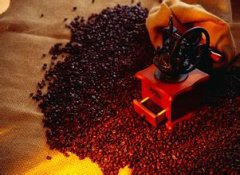
A brief introduction to the description of flavor and aroma characteristics of Dominica coffee beans treated by washing
Unlike coffee produced in Haiti, most of the coffee grown in the Dominican Republic has been washed, which is a symbol of high quality. In the early 18th century, coffee was introduced to Domiga from Martinique, and fine coffee was produced in the north represented by Hibao and in the south, including Okayabani Santo Domingo. Among them, coffee from Santo Domingo and Barney

Introduction to the flavor and taste characteristics of the fresh, elegant and full-grained Dominica coffee manor
The Baez regime was overthrown in 1874, but was elected president two years later and finally stepped down in 1878. General Ulysses Errou came to power in 1882, which gradually stabilized the political situation in Dominica, which had been uneasy for many years. During the reign of President Errou, the political stability gave many countries a respite, and the continuous improvement of sugar industry technology resulted in many European countries.

A brief introduction to the treatment method of grinding degree and baking degree of bright sour Dominica boutique coffee beans
Dominica is an island country with a tropical climate, with little change in temperature throughout the year. Except for the lower temperature in the Central Cordillera Mountains, which can reach less than 0 ℃ in winter, the average annual temperature in other areas is between 25 and 30 ℃, while affected by the mountain topography, the north and east face the northeast trade wind, with an annual precipitation of 1500-2500 mm, which belongs to a tropical marine climate.

A brief introduction to the market price of Dominica Santo Domingo coffee varieties with mellow taste
The temperate climate in Dominica is conducive to coffee cultivation, and the best places to grow coffee are the Barahona region in the southwest and the Cibao Valley north of Santiago, Dominica's second largest city. The northern region, represented by Hibao, and the southern region, including Okayabani Santo Domingo, produce good coffee. Among them, Santo

Dominica Single Bean Flavor Description Characteristics Growing information Growing varieties
Professional barista communication, please pay attention to coffee workshop (Weixin Official Accounts cafe_style ) Dominica: Santo Domingo coffee flavor characteristics: fresh and elegant, full particles, excellent acidity, pleasant aroma. Dominican Republic is located in the West Indies in the eastern part of the island of Haiti, west of the Republic of Haiti, north of the Atlantic Ocean, south of the Caribbean Sea. The area is about 49000 square meters.